

B-G.33: Multi-scale characterization of epigenomic alterations in pediatric brain tumors
Authors
Audrey Baguette
Quantitative Life Sciences, McGill University
Bhavyaa Chandarana
Department of Human Genetics, McGill University
Steven Hebert
Lady Davis Research Institute
Nathan Zemke
Department of Cellular and Molecular Medicine, University of California San Diego
Michael Taylor
Department of Pediatrics, Baylor College of Medicine
Nada Jabado
Department of Human Genetics, McGill University
Claudia Kleinman
Department of Human Genetics, McGill University
Keywords
scMethylHiC, epigenomics, 3D genome, single-cell, pediatric brain tumors
[sponser-meet-now-chat][/sponser-meet-now-chat]
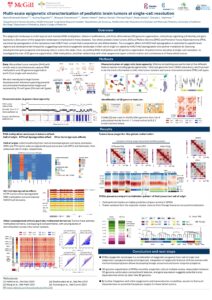
Many lethal pediatric brain tumors are driven by aberrant epigenetic landscapes that inhibit the normal differentiation of neural progenitor cells and transform them into a malignant state. The epigenetic landscape is multilayered, including DNA methylation, histone modifications, and three-dimensional (3D) genome organization, and these layers collectively shape cell identity.
To investigate how these layers contribute to tumor maintenance, we simultaneously profiled the 3D genome and DNA methylation from two tumor types using snm3C-seq. Leveraging both modalities, we inferred structural variants, identified intratumoral genetic heterogeneity, and defined clones within each sample. DNA methylation-based embedding and clustering stratified malignant cells into groups concordant with structural variant-defined clones. Differential methylation analysis across these clones uncovered distinct partially methylated domain patterns, probably linked to variation in proliferative states among malignant cells.
3D genome-based embedding, in turn, revealed concordant heterogeneity, identifying clone-specific 3D genome features. Understanding the role of these layers and their coordination in initiating and maintaining malignancy in these lethal tumor types may enable the development of novel therapeutic targets.
Co-authors: Audrey Baguette, Bhavyaa Chandarana, Alejandro Mejía García, Steven Hébert, Nathan Zemke, Marco Gallo, Michael Taylor, Verónica Rendo, Bing Ren, Mathieu Blanchette, Nada Jabado, Claudia L. Kleinman
Contact Attendee
Warning: Attempt to read property "user_email" on string in /home/1276969.cloudwaysapps.com/ydbgzhdjeq/public_html/wp-content/plugins/my-conference-now/functions.php on line 2826